
Will your child be ready for kindergarten when the time comes? For many parents, that question comes up early, well before the first day of school. You want your child to feel comfortable in a group, follow routines without constant prompting, speak up when they need help, and walk into the classroom with real confidence.
That kind of readiness does not develop all at once. It is built day by day through consistent routines, guided learning, and strong relationships with educators who know how young children grow. At Green Apple Kids and Windermere Kids, our daycare programs are designed to support that process in practical, meaningful ways.
How Toronto Daycare Programs Build Kindergarten Readiness Skills
Cognitive Development and Early Learning Foundations
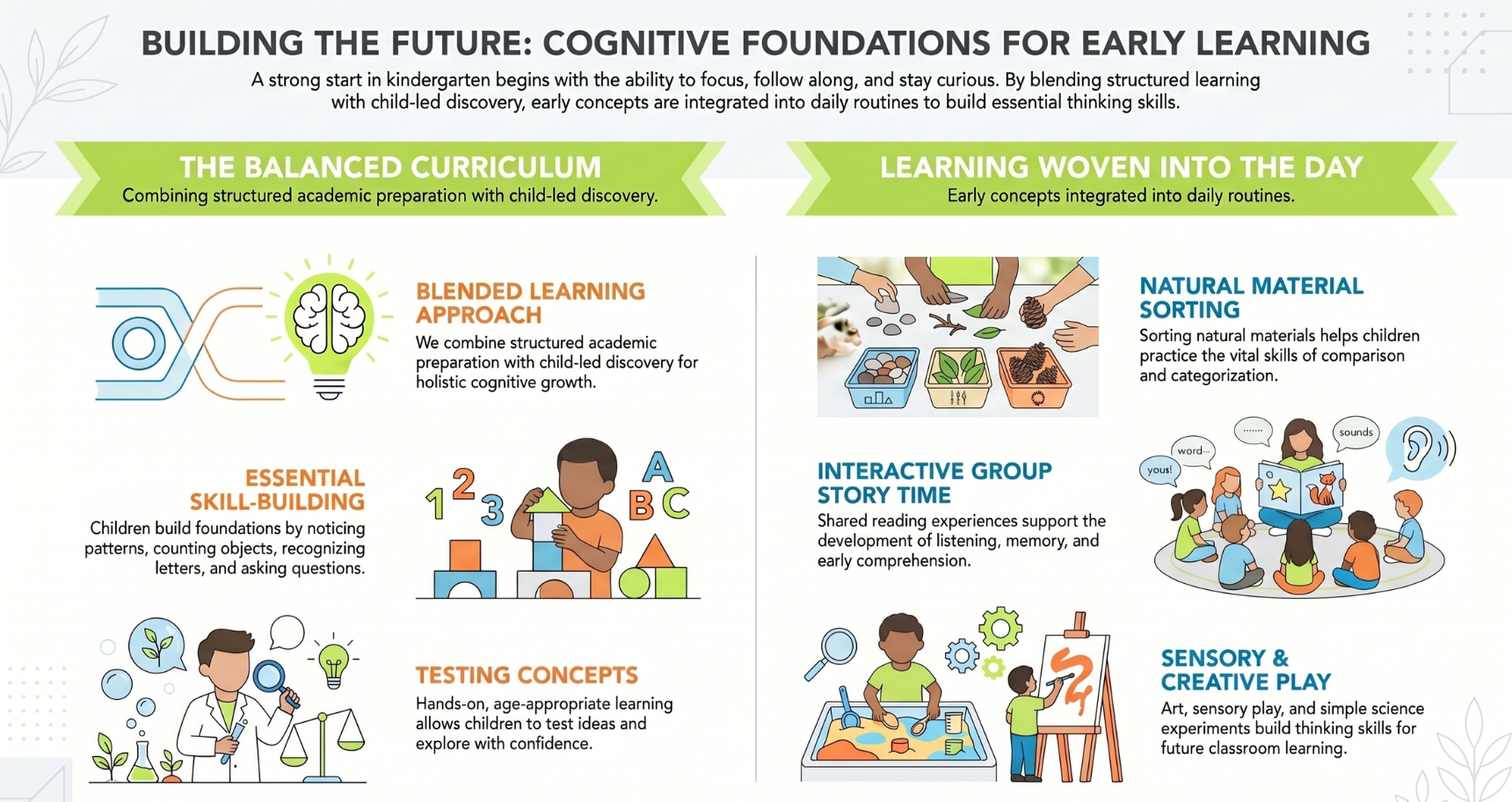
A strong start in kindergarten begins with the ability to focus, follow along, and stay curious. In our classrooms, children are introduced to early concepts through a Balanced Curriculum that blends structured learning with child-led discovery.
Children build these early learning foundations through activities that help them:
- notice patterns and make comparisons
- count objects and build early numeracy skills
- recognize letters and strengthen early literacy awareness
- ask questions and explore ideas with confidence
- test concepts through hands-on, age-appropriate learning
This kind of early learning is woven into the day. A child sorting natural materials is practising comparison and categorization. A group story time supports listening, memory, and early comprehension. Art, sensory play, simple science experiences, and guided numeracy activities all help children build the thinking skills that support later classroom learning.
Social Skills and Emotional Readiness
Kindergarten is full of shared experiences. Children need to wait, cooperate, speak up, recover from frustration, and join a group without feeling lost in it. Those are learned skills, and they are strengthened through daily interactions with peers and educators.
At our centres, children practise social growth. They learn how to listen when others are speaking, take part in group activities, and manage the ups and downs that come with being in a classroom community. They are guided through moments of conflict, encouraged to use language to solve problems, and supported as they become more independent.
Key social and emotional milestones often include:
- taking turns and sharing materials during play
- joining group routines with growing confidence
- expressing feelings in age-appropriate ways
- building empathy and awareness of others
- managing brief separation from parents more comfortably
These moments shape kindergarten readiness just as much as academic preparation does. When children feel secure, understood, and capable, they are more likely to participate fully and adapt to the structure of school.
Language, Communication, and Physical Development
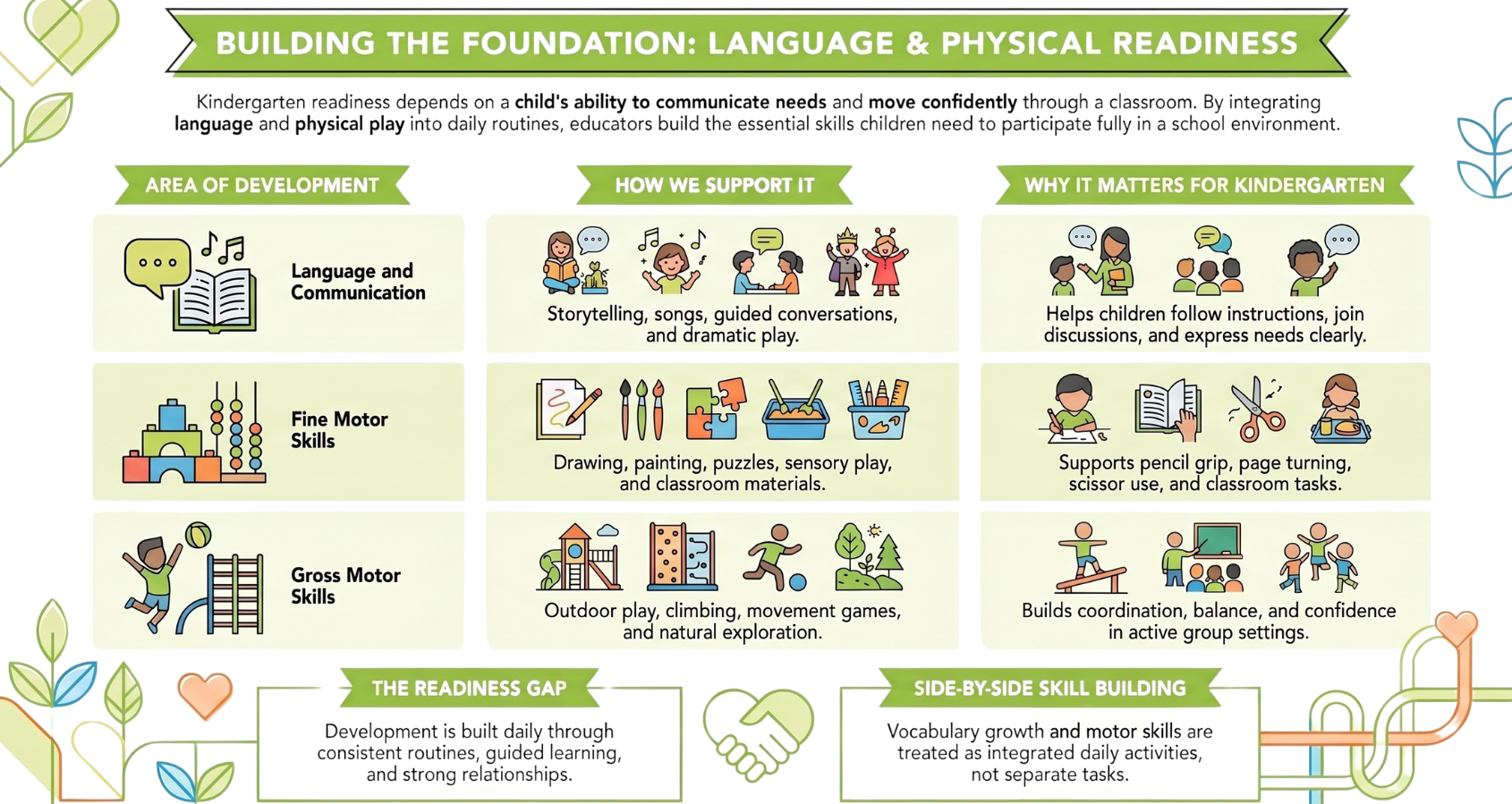
Kindergarten readiness depends on more than one area of growth. Children need to understand instructions, ask for help, follow conversations, and share their ideas clearly with others. They also need the physical confidence to manage classroom tools, move safely through group settings, and take part in active learning throughout the day.
At our independent daycare centres, these skills develop side by side. Educators support vocabulary growth through storytelling, songs, dramatic play, group discussion, and one-to-one conversation. Children hear rich language in context and are encouraged to respond, describe, and explain. At the same time, they build fine and gross motor skills through drawing, painting, puzzles, climbing, dance, outdoor play, and hands-on classroom activities.
| Area of Development | How We Support It | Why It Matters for Kindergarten |
| Language and communication | Storytelling, songs, guided conversations, circle time, and dramatic play | Helps children follow instructions, join discussions, ask questions, and express needs clearly |
| Fine motor skills | Drawing, painting, puzzles, sensory play, and classroom materials | Supports pencil grip, page turning, scissor use, and other classroom tasks |
| Gross motor skills | Outdoor play, climbing, movement games, dance, and natural playground exploration | Builds coordination, balance, body awareness, and confidence in active group settings |
Children who have regular opportunities to listen, speak, move, and practise everyday classroom skills often arrive at school more comfortable participating and adapting.
It is one of the lasting strengths of quality early childhood education, especially when communication and physical development are treated as part of the whole day rather than separate activities.
Routine, Structure, and Independence
Children do better in school when they know how a classroom day works. They do not need every detail to be familiar, but they benefit from understanding that the day has a rhythm, that transitions happen, and that expectations are consistent.
Daily schedules help children build that comfort. They move through teacher-guided learning, independent play, meals, hygiene routines, outdoor time, rest, and group transitions in a predictable flow. Over time, these patterns help children feel more secure and less overwhelmed by change.
A typical day may include:
- arrival, welcome activities, and morning group time
- learning centres, outdoor play, and meals or snacks
- rest, afternoon activities, and end-of-day transitions
Inside that structure, children also build independence. They practise putting on shoes and outdoor clothing, washing hands, tidying materials, following instructions, and managing small tasks on their own. These self-help skills matter in kindergarten. A child who can move through basic routines with confidence is often better able to focus on learning and social participation.
Why Daycare in Toronto Sets the Stage for Kindergarten Success
At Green Apple Kids and Windermere Kids, we believe school readiness should be built through steady, meaningful experiences that respect how young children learn. Our Toronto daycare programs are designed to support kindergarten readiness through structured routines, thoughtful early childhood education, and strong relationships.
Families in West Toronto choose us because they want a childcare experience that feels warm, polished, and thoughtfully run. We are proud to offer that balance. If you are looking for a daycare Toronto families can trust to support kindergarten readiness with care, structure, and intention, reach out to Green Apple Kids and Windermere Kids today.
Contact Our Centres
Green Apple Kids
Email: gm@greenapplekids.ca
Phone: (416) 570-6096
Windermere Kids
Email: directorWK@greenapplekids.ca
Phone: 416-761-9772
Daycare Toronto FAQs for Parents Preparing for Kindergarten
What age should a child start daycare in Toronto?
Children can begin daycare at different ages depending on family needs, work schedules, and the child’s stage of development. Many families start in infancy or toddlerhood, while others begin closer to the preschool years. What matters most is finding a program that offers strong care, consistency, and support that fits the child’s stage of development.
What skills should a child have before kindergarten?
Children benefit from being able to follow simple instructions, join group activities, communicate basic needs, manage short separations from parents, and handle some self-help tasks such as handwashing, eating, and putting on outerwear. They do not need to do everything perfectly before school starts.
How does daycare help with kindergarten readiness?
Daycare helps children become familiar with routines, group learning, peer interaction, and classroom expectations. Over time, those experiences help children feel more comfortable with structure and more prepared to participate once kindergarten begins.
What makes a daycare ‘premium’?
A premium daycare usually offers experienced educators, intentional programming, high standards for safety and cleanliness, strong communication with families, and an environment designed to support development rather than simply supervise children.
Is daycare necessary for early childhood development?
Children can thrive in different care settings. A high-quality daycare can be a valuable choice for families who want dependable childcare in a setting that supports social growth, communication, independence, and early learning in a consistent way.